
Lee County Criminal Court Cases
Lee County belongs to Illinois' Fifteenth Judicial Circuit. The Circuit Court hears felony and misdemeanor cases as well as traffic and ordinance matters that reach the state court system. Illinois has no separate municipal criminal-court tier for Dixon, Amboy, or Ashton. Their filed criminal cases therefore lead to the same county court system. The Circuit Clerk's Civil/Criminal Division maintains filings, the chronological docket, court orders, financial assessments, and final dispositions.
The court and clerk are at 309 South Galena Avenue in Dixon. The Civil/Criminal Division may be reached at 815-284-5234, while the traffic counter uses 815-284-5230. The State's Attorney files and prosecutes state charges from the same court campus. That office does not replace the clerk as the public case-file custodian. For a filed charge, certified judgment, hearing history, or sentence, start with the Lee County Circuit Clerk's criminal division.
Search Lee County FullCourt Records
Lee County links the FullCourt Enterprise guest service from its official Circuit Clerk quick-links page. It is the county's main remote route for public case information. Search an exact case number first when one is known. Otherwise, use a name and try reasonable spelling variants. Confirm that the selected result belongs to Lee County, then compare the filing year, case type, and public identifiers before reading the docket.
The safest reading method is count by count. An original charge may be amended or dismissed while another count produces a conviction. Open the latest docket entries and locate the actual disposition rather than treating the first allegation as the outcome. Portal availability and workflow can change, so the official Lee County court-links page is the best doorway.
| Search route | Best input | What to check | Fallback |
|---|---|---|---|
| Case number | Year, type, sequence | County and complete number | Ask the clerk to confirm format |
| Party name | Last and first name | Spelling variants and filing year | Call the criminal counter |
| Case type | CF, CM, or traffic context | Correct division and status | Use the clerk's index |
| Docket review | Most recent event | Disposition for each count | Order a copy or certification |
How to Search Case Records
A complete Lee County criminal case search uses both the public index and the clerk when needed. The online result is useful for discovery, but a certified copy comes from the official custodian.
- Open FullCourt through the Lee County Circuit Clerk's official quick-links page.
- Enter the exact case number, or search the party name with spelling variants.
- Verify Lee County, filing year, case type, and status before relying on the match.
- Read every count, the newest docket entries, and the recorded disposition.
- Call or visit the clerk for archived documents, images, or certified copies.
In-person service is available at the clerk's third-floor Suite 320 during published weekday hours, 8:30 a.m. to 4:30 p.m. The court campus also has an e-filing kiosk or resource room and a law library with internet and printing. Those resources can help with access, but clerk staff cannot provide legal advice.
Certified Lee County Criminal Files
Remote docket metadata may be enough to identify a case, but it is not always the document a reader needs. Lee County's criminal-record-search instructions direct copy and certification requests to the Circuit Clerk. Older files, including material predating the electronic index, may require a manual search. Give the clerk a case number whenever possible. If it is unknown, supply the full name and a narrow year range.
A certification is the clerk's formal attestation that the copy comes from the court file. It can matter when a person is reviewing their own disposition or proving that a charge was dismissed. Ask which pages must be certified rather than ordering the whole file by default. Published fees should be checked with the clerk because the requested format, certification, and archive work can affect cost. The court counter, phone channel, and FullCourt index together cover records that cannot be completed through one screen.
Lee County Case File Contents
The case file follows the judicial matter, not merely the booking. Its header commonly identifies the year, case type, sequence, filing date, open or closed status, and assigned judge when public. Party and attorney appearances may follow. Charge rows can show the count, statute, class, offense date, and whether a count was amended or dismissed.
| Case number and court | Year, case type, sequence, filing date, status, and Lee County court identity. |
|---|---|
| Charging document | Complaint, information, or public indictment metadata and each filed count. |
| Docket entries | Filings, appearances, motions, pleas, orders, warrants, payments, and closure events. |
| Hearing dates | Past and scheduled events when the public interface exposes them. |
| Disposition and judgment | Dismissal, acquittal, plea, verdict, or other outcome recorded for each count. |
| Sentence and conditions | Custody, probation, conditional discharge, credit, fines, costs, and restitution when public. |
Social Security numbers, full financial identifiers, protected victim or minor data, and sealed documents do not belong in the public view. Docket metadata may remain visible when a document image must be ordered from the clerk.
Read Lee County Docket Terms
Case labels can cause mistakes. CF generally signals felony context, CM misdemeanor context, and TR traffic context. Those labels identify the case stream, not the result. A complaint or information is an accusation filed to begin or support the case. An indictment is a grand jury's formal accusation. None is a conviction.
A disposition is the recorded outcome. Dismissal ends a charge without conviction, though some dismissals do not bar refiling. Nolle prosequi means the prosecutor chose not to continue that charge at that time. A plea is the defendant's formal response, while a judgment states the court's decision. Read fines, costs, restitution, and sentence fields separately because each records a different obligation. Older entries may use “bond,” though current Illinois pretrial decisions focus on release conditions or detention under the amended system.
Stages of a Criminal Case
The State's Attorney decides which charges to file after the arresting agency supplies its reports. Once filed, the clerk creates the case and adds events as the court acts. At a first appearance, the court addresses rights, counsel, the initial plea process, judge assignment, and felony preliminary-hearing issues as applicable. Pretrial entries can include motions, discovery-related events, status dates, and changes to charges.
Case flow: Charges Filed › Arraignment › Pretrial › Plea or Trial › Disposition › Sentencing
A plea or trial does not complete the reading task. Check the judgment and sentence, then review later events for payment, probation, warrants, modifications, sealing, or closure. The Lee County Public Defender FAQ gives local context for first appearances. The image below preserves that official explanation as a visual reference.
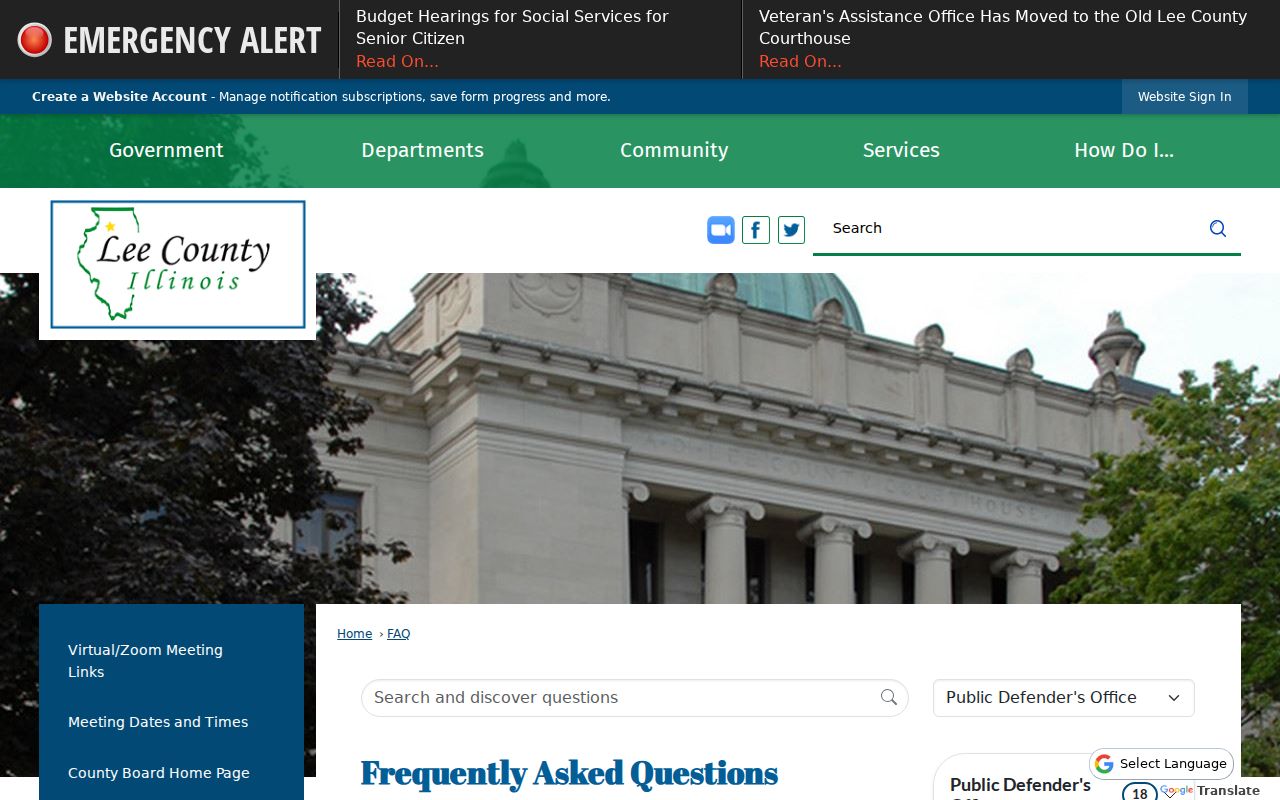
That local material helps distinguish an early procedural event from the final court outcome.
Missing Lee County Dispositions
A new filing can appear before the final outcome reaches every connected system. If the newest docket line is only a hearing, motion, or status date, do not infer a conviction or dismissal. Call the Circuit Clerk and ask whether a later disposition exists or whether an archived image must be retrieved. When an ISP record lacks a disposition, obtain certified court documentation and use the ISP correction or Access and Review process.
FullCourt also should not be treated as a national search. Federal Lee County matters fall within the U.S. District Court for the Northern District of Illinois and use PACER. A person's own FBI Identity History Summary follows a fingerprint process through the FBI, while Illinois conviction dissemination follows ISP rules. These sources answer different questions. The county docket remains the strongest source for what the Lee County judge actually entered.
The CHIRP login notice shows that electronic ISP access requires an agreement and authenticated Illinois Digital ID.
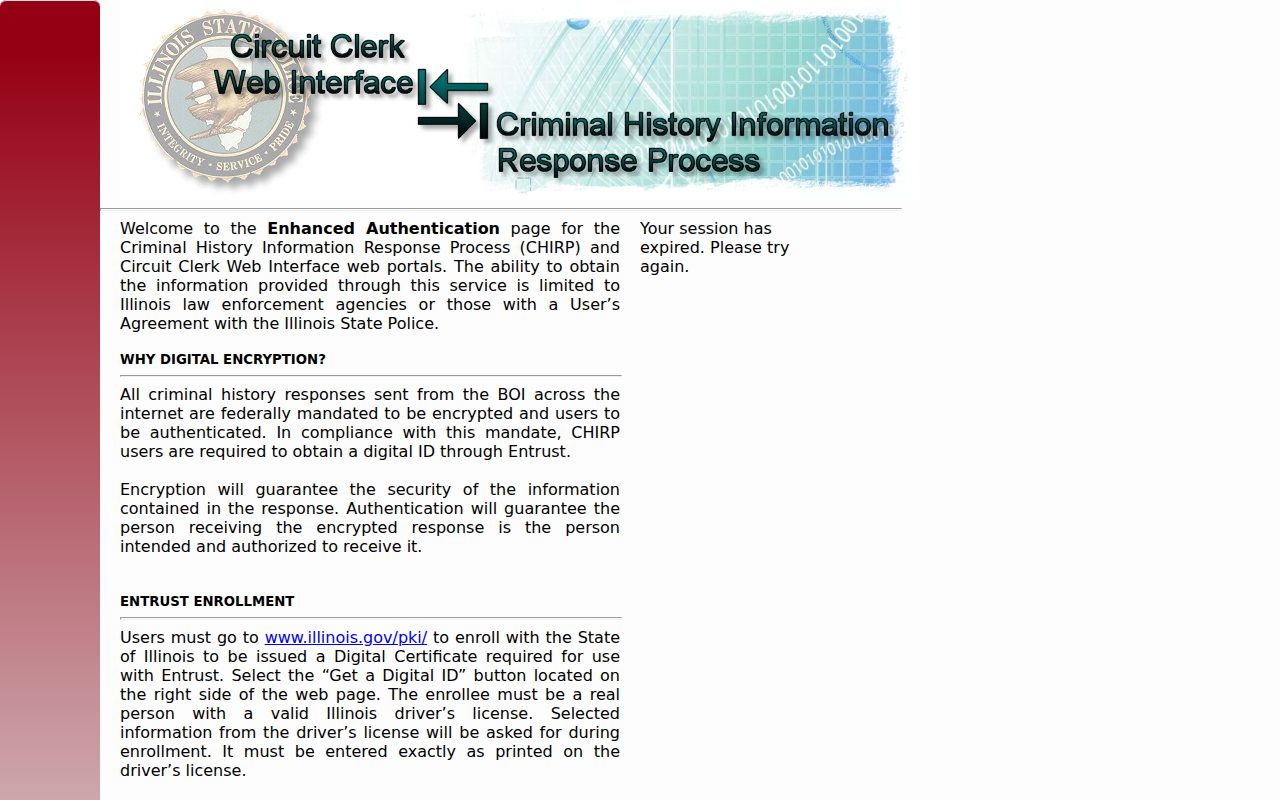
This account gate is why FullCourt, the clerk, and ISP should not be described as one interchangeable public database.
Lee County Case Access Restrictions
Illinois court records are generally open under court rules, but remote access is not absolute. Sealed and impounded cases, juvenile matters, protected victim and minor information, financial identifiers, and confidential documents can be withheld or redacted. Illinois FOIA governs public-body records, yet it does not override court rules, sealing orders, juvenile confidentiality, or law-enforcement exemptions.
A missing public result can stem from sealing, spelling, date limits, system delay, or a record that was never filed in Lee County. It does not prove that no protected record exists. Ask the clerk about the index and access status without requesting confidential content. Illinois' Criminal Identification Act governs access, review, correction, and implementation of sealing or expungement orders. The Uniform Conviction Information Act governs prescribed ISP conviction-information requests. Each channel keeps its own scope.
Use court records to understand a specific case or review your own history. This resource is not a consumer reporting agency, and neither the page nor its sponsored search widget may be used for credit, employment, tenant screening, insurance, or any other FCRA-regulated decision.
Lee County and Federal Cases
Federal criminal cases connected to Lee County do not reliably appear in FullCourt. Lee County lies in the U.S. District Court for the Northern District of Illinois. PACER is the official federal docket and document system. It requires registration and generally charges by the page under the judiciary's billing rules. Sealed filings and protected identifiers remain unavailable.
The official PACER service shows the federal route.
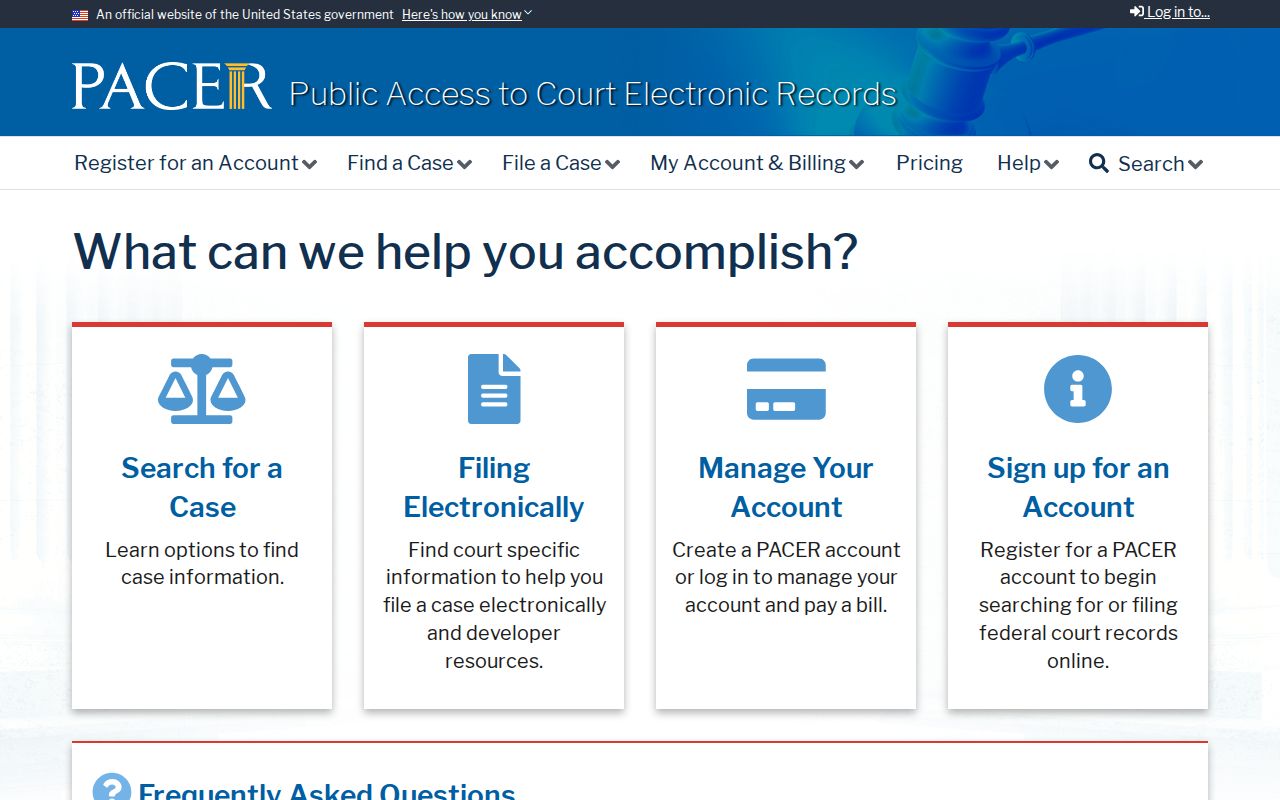
Use PACER for a federal docket, not as a substitute for the Lee County clerk's state-court file.
A fingerprint-based FBI Identity History Summary lets a person seek their own federal identity-history response. The FBI electronic request portal explains that process.
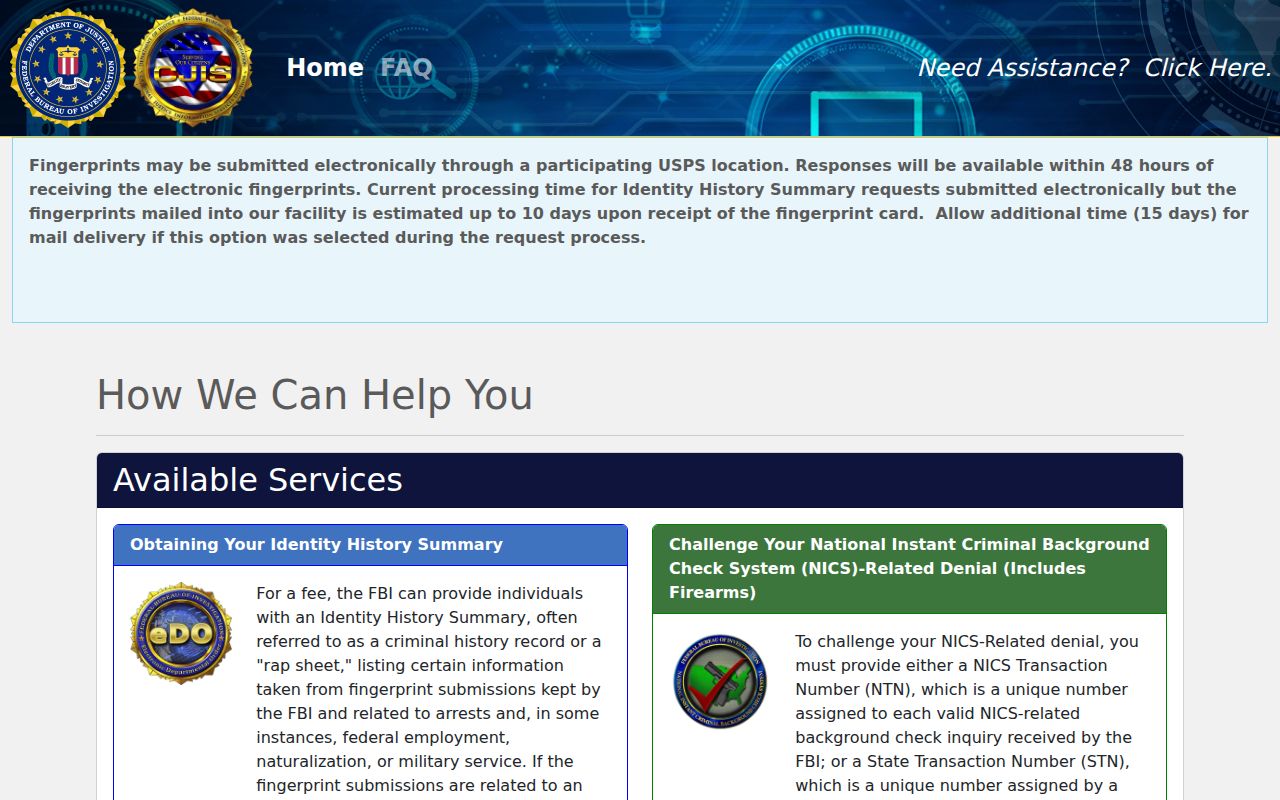
Keeping these routes separate prevents a federal identity response from being mistaken for a filed Lee County disposition.